

Medusa vs Shopify
Migrating from Shopify to Medusa enabled the business to overcome the limitations of a proprietary platform and achieve greater control over its e-commerce operations.
- Year
- 2025
- Practice
- Commerce on Medusa
Overview
Our goal was to migrate a business from Shopify to Medusa while addressing the following challenges:
- Overcoming the limitations of existing migration tools that fail to handle advanced Shopify features.
- Ensuring a seamless transfer of critical data, including Collections, Products, Custom Collections, Customers, Customer Addresses, and Orders.
- Preserving SEO configurations and third-party integrations during migration.
Approach
-
Requirement Analysis:
- Identified all data entities and configurations to migrate.
- Mapped Shopify’s data structure to Medusa’s schema, ensuring compatibility.
-
Custom Data Extraction:
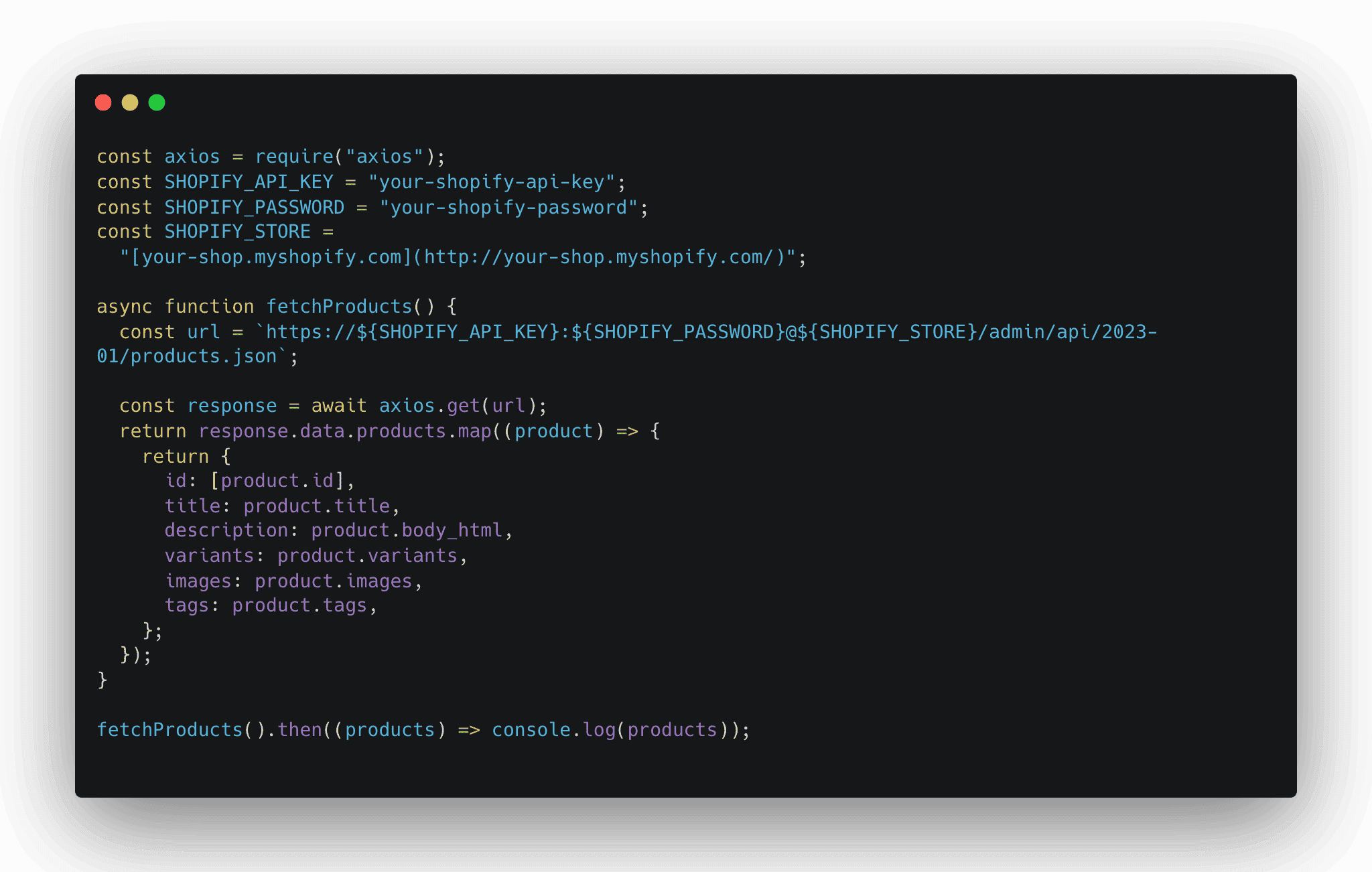
- Developed scripts to extract data from Shopify’s API, including custom fields and advanced configurations.
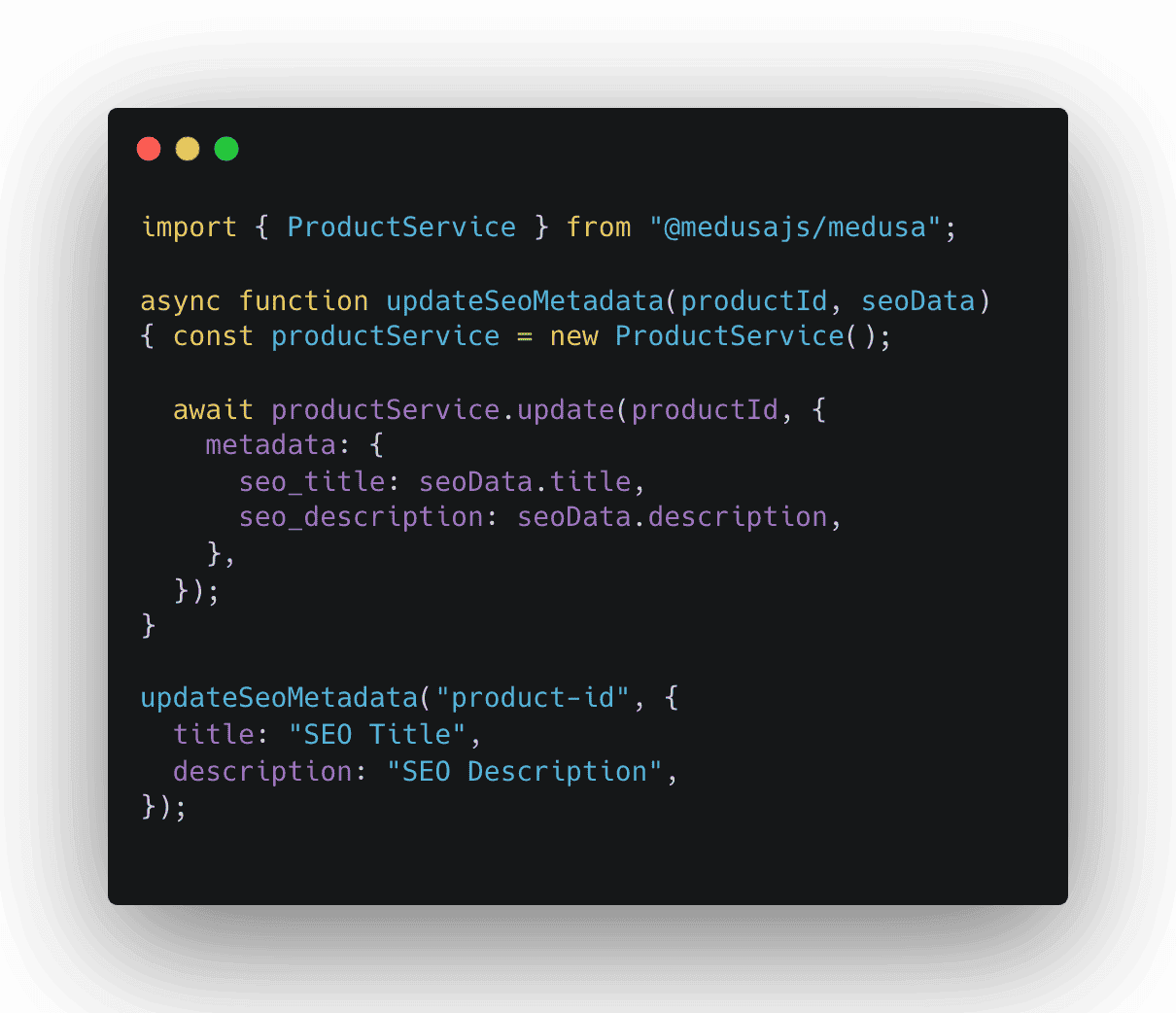
- Exported SEO metadata, such as meta titles and descriptions, for seamless integration into Medusa.
-
Data Transformation and Import:
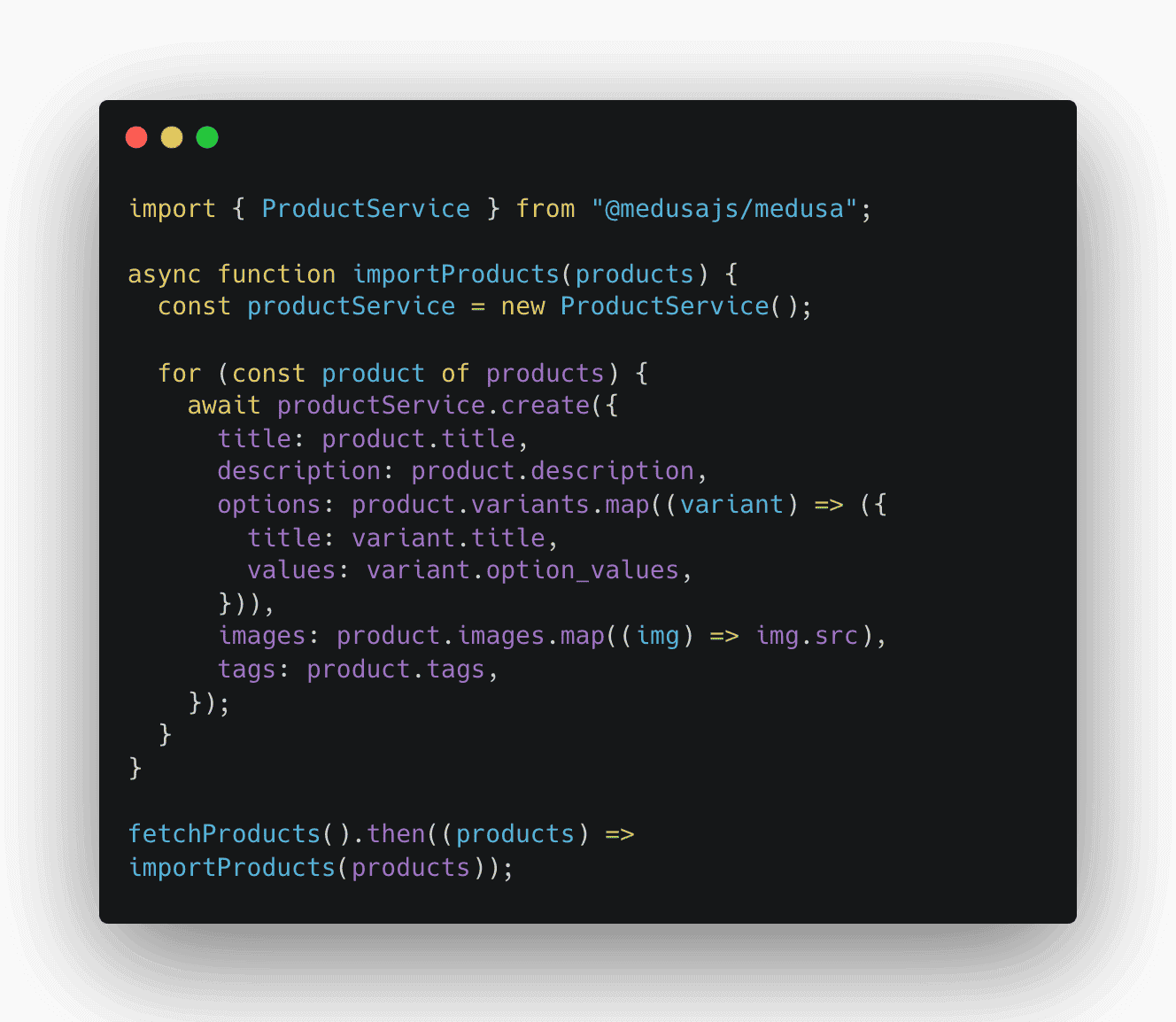
- Transformed extracted data to align with Medusa’s models.
- Used Medusa’s Admin API and services to import collections, products, and customer data.
-
Testing and Validation:
- Validated the integrity and accuracy of imported data.
- Conducted rigorous testing to ensure that all features worked seamlessly on the Medusa platform.
Implementation
Below are sample code snippets demonstrating the migration process from Shopify to Medusa.
Data Extraction from Shopify
Data Transformation and Import into Medusa
Handling SEO Metadata
Outcomes
- Seamlessly transferred all critical data, including collections, products, and customer records, to Medusa.
- Preserved SEO metadata and third-party integration configurations.
- Delivered a tailored e-commerce platform that empowered the business to scale without restrictions.
Key Takeaways
- Custom Solutions Over Standard Plugins: Standard migration tools often fail to address complex requirements. A custom approach ensures data integrity and feature parity.
- Medusa’s Flexibility: Medusa’s open-source architecture simplifies the development of bespoke e-commerce solutions.
- Scalable Migration Process: A structured approach ensures the migration process is efficient, repeatable, and scalable.
Conclusion
Migrating from Shopify to Medusa enabled the business to overcome the limitations of a proprietary platform and achieve greater control over its e-commerce operations. The success of this project underscores the importance of a custom, well-planned migration strategy in harnessing the full potential of Medusa’s open-source framework.
More in Commerce on Medusa
If you have a system you'd rather not replace — start there.
We respond in writing, within two business days. No discovery call gates the first conversation — brief us and we'll tell you whether we're a fit, or refer you on.
or write to hello@intuio.io